

Event Summary:
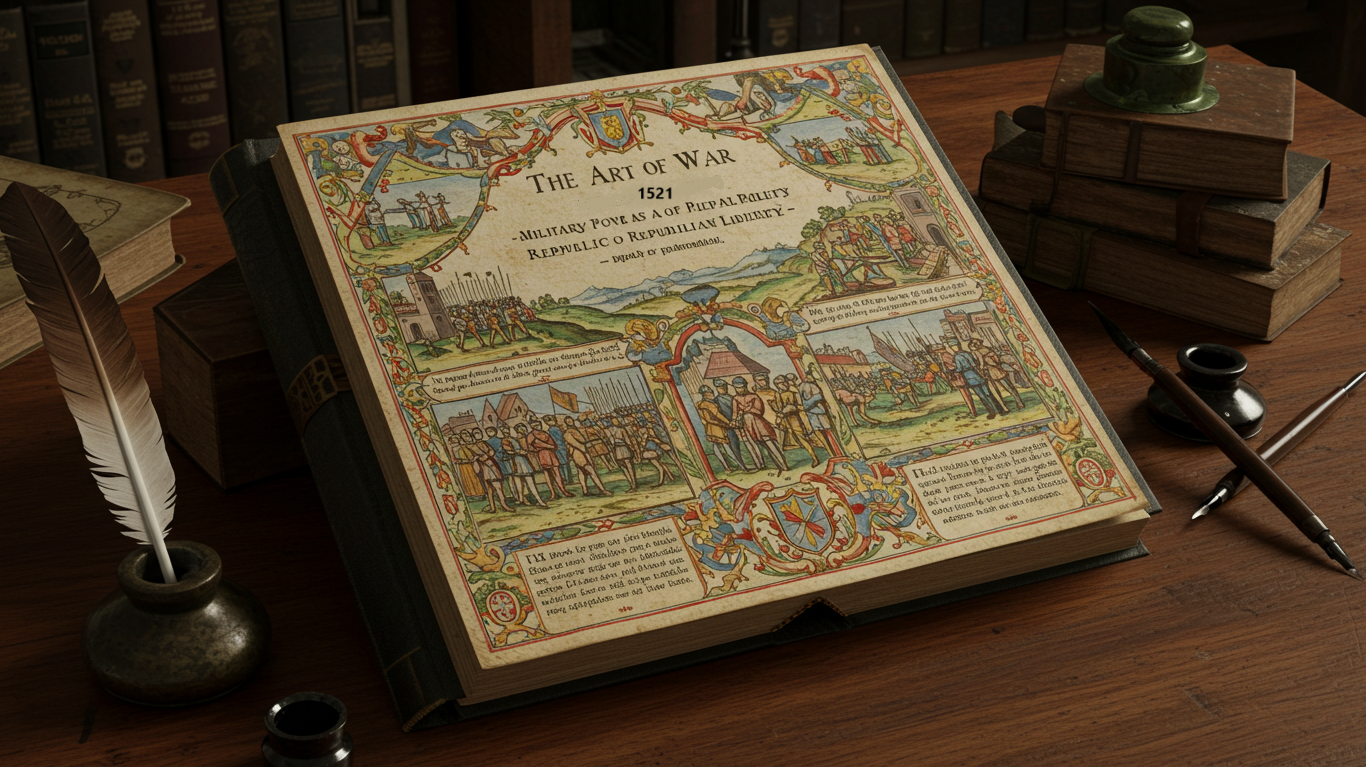
In The Art of War, Niccolò Machiavelli argued that a strong, citizen-based military was essential to protect liberty and sustain republican government. Published in 1521, it was his only printed work during his lifetime and offered a detailed vision of how military institutions shape political life.
Form of Dialogue:
Machiavelli framed the work as a dialogue between the fictional Fabrizio Colonna and Florentine gentlemen. He drew inspiration from classical formats used by Plato and Cicero.
Citizen Militias Over Mercenaries:
He condemned reliance on mercenaries or foreign troops. Mercenaries, he claimed, lacked loyalty and moral discipline, and often endangered their employers.
Rome as the Model:
Machiavelli looked to ancient Rome as the ideal: its citizen-soldiers united civic duty with military strength. Political greatness, he argued, emerged from military self-reliance.
War and Politics Are Intertwined:
He rejected the idea that war was separate from politics. Instead, war was an extension of political strategy and a necessary tool for defending the republic.
Training and Discipline:
He stressed constant readiness, rigorous training, and public involvement in arms. He believed liberty decayed when citizens surrendered military responsibility to professional classes.
Military Innovation and Strategy:
Though focused on classical models, Machiavelli offered updated insights on organization, fortifications, arms, and tactical maneuvering relevant to early modern warfare.
Weapons Reflect Society:
Machiavelli believed the kind of arms a society bears reveals its values. Free citizens carry arms; subjects do not. Military structure mirrored political freedom.
Defense and Expansion:
A strong republic, in his view, must defend its liberty—and when necessary, expand its power to prevent external threats from overwhelming it.
Why It Matters:
The Art of War linked civic virtue and military readiness. It shaped early modern republicanism, influencing thinkers like Rousseau and the framers of the U.S. Constitution. It revealed Machiavelli’s deepest concern: liberty cannot survive without citizens who are ready to fight for it.

About Dr. Gerti Tashko, MD
Dr. Gerti Tashko, MD, is a board-certified endocrinologist based in Montgomery County, Maryland. He is uniquely certified in endocrinology, lipidology, hypertension, and obesity medicine. His practice offers comprehensive, root-cause-focused metabolic and endocrine care, available both virtually and in person. He uses advanced diagnostics, personalized nutrition, and preventive medicine to optimize long-term health outcomes.
